
When the seasonal rains come to South Sudan, they are a familiar part of life. But when the rivers swell beyond their historic banks and the floodwaters swallow entire villages overnight, the familiar quickly turns into a fight for survival.
During the recent catastrophic flash flooding across Northeast Africa, communities in South Sudan found themselves at the epicenter of a quiet, unfolding tragedy. The waters didn’t just wash away mud-brick homes; they took the harvest, the livestock, and the basic foundations of daily life. Families were forced to wade through waist-deep water for days, carrying only what they could balance on their heads, searching for patches of high ground that hadn’t yet been submerged.
When the immediate scramble for safety ended, a new, agonizing reality began. Thousands of displaced people were left sleeping outdoors on damp, crowded strips of elevated land, exposed to the elements and highly vulnerable to waterborne diseases.
At the National Relief Trust, we know that true recovery cannot begin while a family is sleeping in the mud. Safety and dignity have to come first.
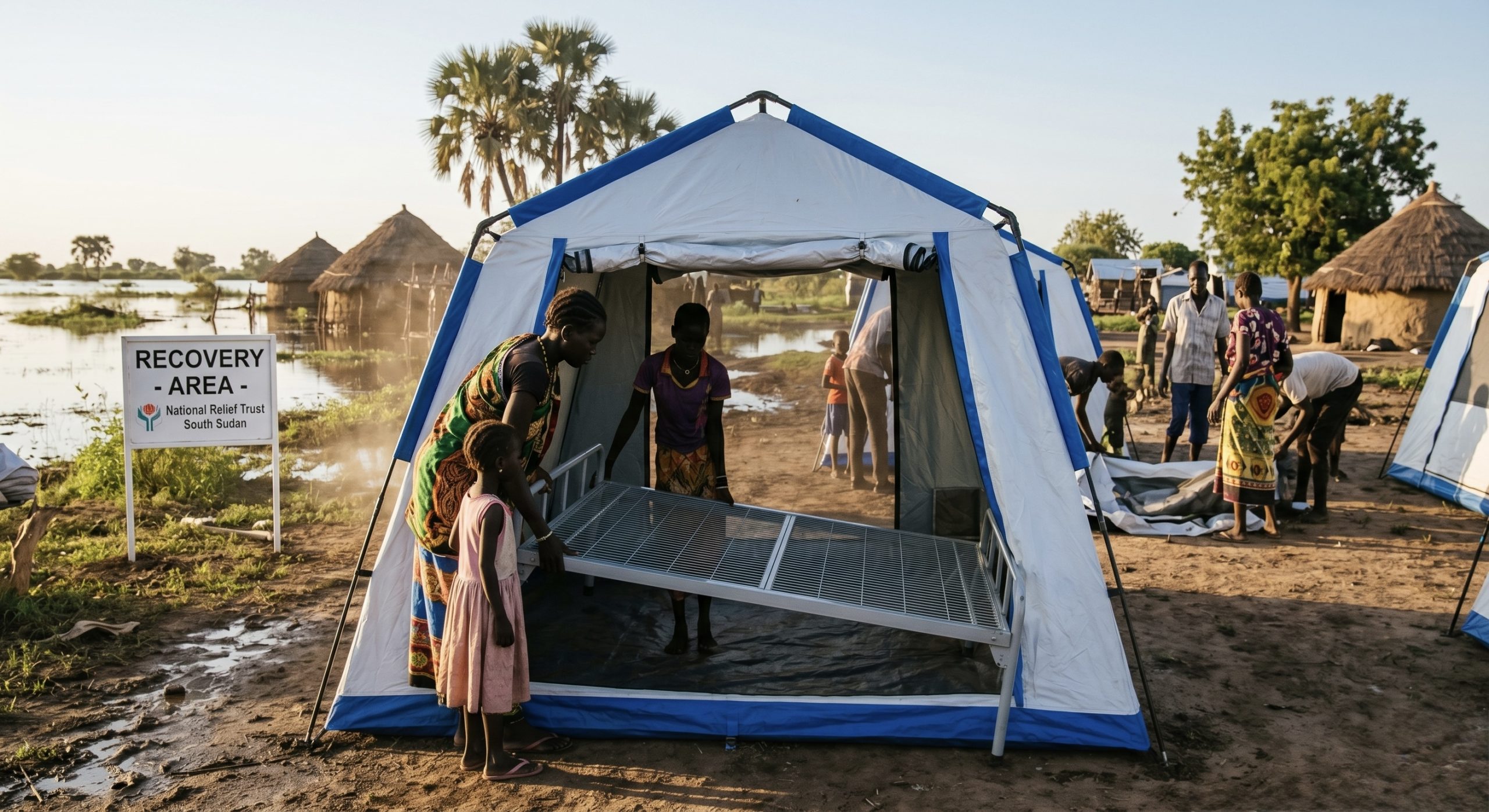
As the local communities braced for the long weeks of displacement, we stepped in to provide vital infrastructure to those informal settlements. The Trust deployed heavy-duty mobile beds and modular camp units directly to the hardest-hit areas. A bed might seem like a simple thing, but in a flood zone, getting a family off the wet ground is a matter of life and death. It drastically reduces the risk of malaria and cholera, and it offers a profound psychological comfort: a dry, safe space that belongs to them.
But physical shelter is only part of the equation. When a flood takes your crops and your home, you are stripped of your financial independence overnight. To restore that agency, the Trust issued a total of £4,753 in instant relief grants directly to the most vulnerable displaced households.
In the context of rural South Sudan, a direct cash grant is transformative. It means a mother doesn’t have to rely on generic aid boxes; she can go to a surviving local market and buy exactly what her children need—whether that is sorghum, clean cooking pots, or essential medicines. It stimulates the local economy right when it needs it most, and it puts the power of choice back into the hands of the people who have lost everything else.
The waters in South Sudan will eventually recede, leaving behind a landscape that needs to be entirely rebuilt. The road ahead is unimaginably long. But by providing dry beds, safe camp units, and the financial means to survive the present moment, we are helping these resilient communities take their very first, crucial steps toward recovery.